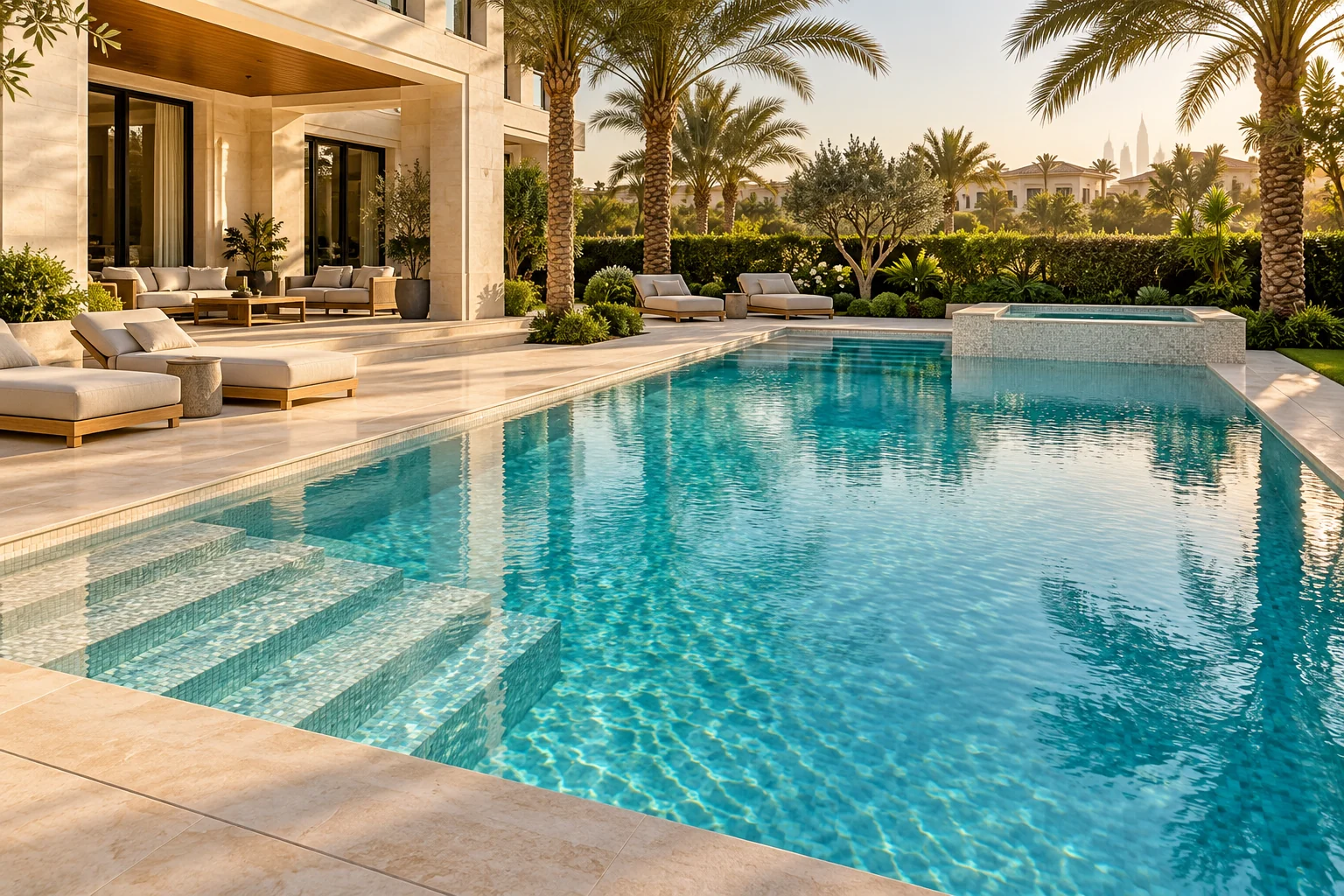
Decide from the condition and the new brief together. Keeping a pool is only useful if the retained elements can support the result you want.
Define the problem and the ambition
Two questions belong at the start: what is wrong with the existing pool, and what do you want the finished space to do? A surface that looks tired is a different brief from recurring water loss or a completely unsuitable layout.
Write down the symptoms, previous repairs and changes you are considering. Separate necessary remedial work from design preferences so the assessment can address both clearly.
Establish what can be retained
A sound shell and suitable footprint can be valuable, but their condition should not be assumed from a photograph. Ask which elements have been assessed and which remain unknown.
The same applies to pipework, equipment, electrical provision and drainage. A new finish does not automatically make the retained systems appropriate for the revised project.
Compare complete options
A renovation proposal and a rebuild proposal need to describe the same intended outcome. Otherwise one may look cheaper simply because it leaves out a desired change.
- Retain and renew: keep suitable elements and replace finishes or systems.
- Reconfigure: change selected features where the structure and approvals allow.
- Rebuild: compare a new structure when defects or the new brief create major compromises.
Allow for what opening up may reveal
Some existing conditions may only become clear after work starts. The proposal should explain the investigation stages, provisional allowances and how a change will be priced and approved.
Ask how the property and garden will be protected, where materials and waste will move, and which areas will be reinstated. These practical details can affect the most suitable approach.
The decision you want to be able to explain
The final choice should be based on a clear account of retained condition, complete cost, expected performance and the design result. A lower initial total is not the only consideration, and a rebuild is not automatically necessary.
Before accepting a proposal, ask the appointed specialist to explain why the recommended route fits both the existing pool and your priorities. Keep that explanation with the agreed scope.
Write two scopes before choosing between them
Ask for the renovation option to identify retained construction, proposed investigations, remedial allowances and the new finish. Ask for the rebuild option to identify removal, new construction, services and reinstatement. These should be complete alternatives answering the same household brief.
Where a condition remains uncertain, keep it visible. A comparison that assumes every retained element is suitable can give a misleading impression of the work still to be resolved.
Look at the garden you want to keep
Mature planting, established terraces, access routes and the relationship with the villa may influence the preferred approach. Walk the property with the responsible team and identify the areas to protect or renew.
The eventual choice should explain both the existing condition and the future design. Keep that explanation with the agreed scope so everyone understands why particular elements are being retained or replaced.
This is an editorial planning guide, not a property survey, approved design or installation specification. Project requirements are confirmed by the appointed specialists.
Let’s bring it back to your home.
Explore the complete service and share a first brief for your property.
Major pool renovations in Dubai