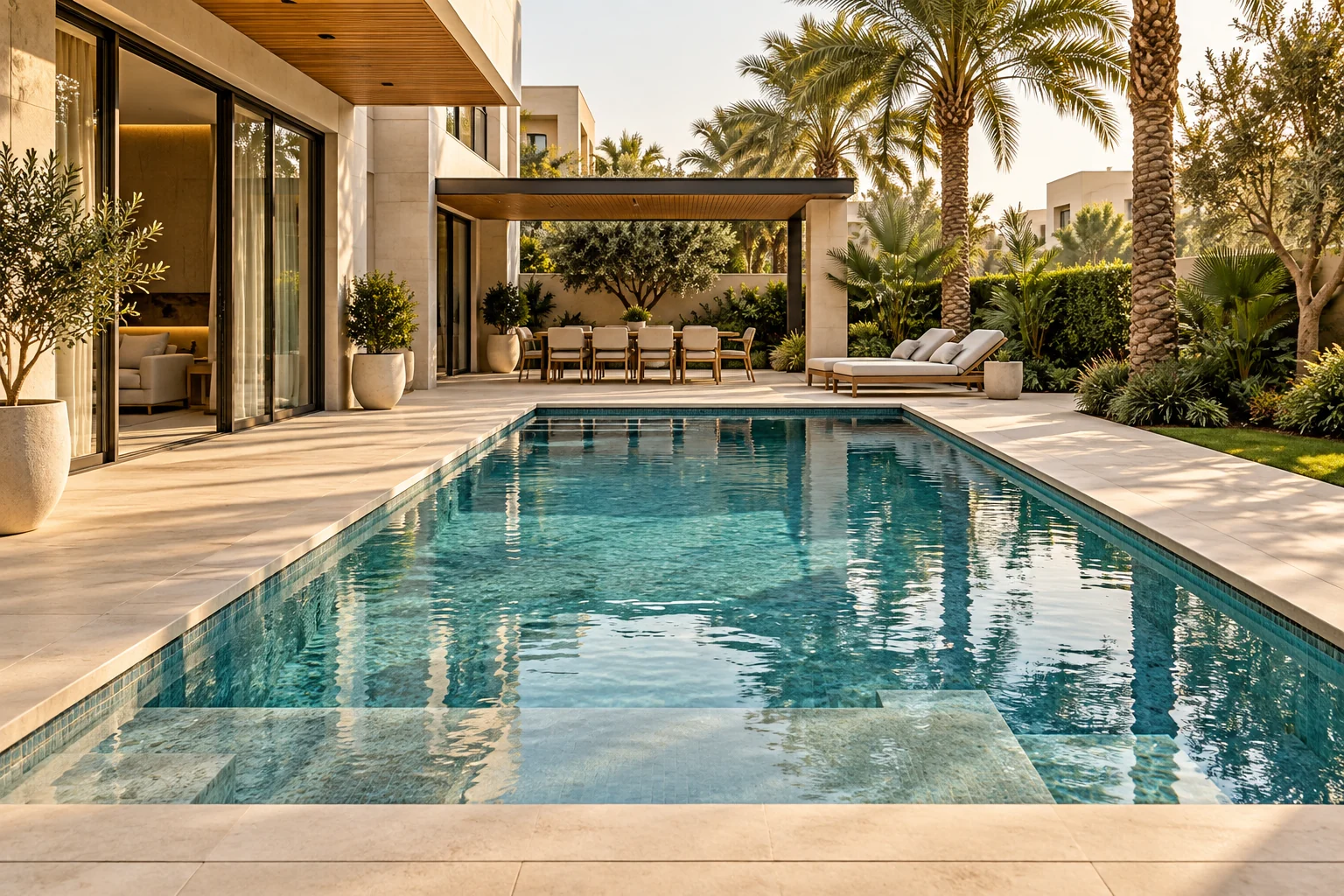
A good quotation lets you identify the scope, the responsible company and the unresolved assumptions without having to guess.
One brief for every quotation
Start by issuing the same written brief to each provider. A family pool, a lap pool and a complex overflow pool are different projects even when the water areas look similar. Note the intended use, dimensions, proposed location and the garden works you expect.
Record the version of drawings or sketches each quotation uses. If one provider has priced a different layout, clarify that difference before comparing totals.
Ask for the construction scope in layers
The proposal should make each stage understandable. An attractive rendering is not the same as a defined construction system.
- Survey, design and specialist coordination.
- Approval responsibilities, submission scope and associated charges.
- Excavation, shell and any specified structural work.
- Preparation, waterproofing, finish, coping and deck interfaces.
- Pipework, filtration, treatment, electrical work and lighting.
- Testing, commissioning, operating demonstration and reinstatement.
Name the equipment and the assumptions
Ask which equipment is included, what it is expected to do and how it will be accessed. General descriptions such as premium pump or smart system are difficult to compare. A model, function and installation scope are more useful.
Where an item is provisional, the proposal should explain what will determine the final scope. Existing buried services, unforeseen conditions and retained components deserve explicit attention.
Read the delivery terms alongside the design
Identify the construction counterparty, the contact responsible for coordination and the responsibilities for approvals. Ask how payment milestones relate to project stages and how variations are documented before the work proceeds.
Separate procurement and approvals from construction time. The programme should state its assumptions and explain how a change in design, material availability or site conditions will be handled.
Finish with the handover
Confirm which records, manuals, commissioning results and warranties you will receive. Ask whether maintenance arrangements are included, optional or your responsibility. A complete quotation ends with a usable and documented installation, not simply the last tile.
For a useful comparison, make a list of items included, excluded and still provisional for each proposal. Resolve the largest gaps before deciding which price represents the best fit.
Compare the boundaries between packages
A pool contractor, landscape team and villa renovation contractor may each price part of the same garden. Ask them to identify the meeting points: service connections, levels, drainage, coping, terrace construction and final reinstatement. Each interface needs an agreed responsibility.
An attractive finish schedule is useful only when it is clear who supplies, installs and protects it. Put owner-supplied items on the same schedule and confirm when the installation team needs them.
Keep a record of what changes
After a meeting, request an updated proposal or written clarification that reflects the agreed decisions. Retain the previous version so you can see which quantities, models, allowances or exclusions changed.
The final comparison should use the same brief and scope. If a provider proposes a different solution, assess that alternative on its own merits before reducing the decision to a total price.
This is an editorial planning guide, not a property survey, approved design or installation specification. Project requirements are confirmed by the appointed specialists.
Let’s bring it back to your home.
Explore the complete service and share a first brief for your property.
New swimming pools in Dubai